Indoor rock climbing has moved from niche sport to mainstream entertainment. There are now more than 600 dedicated climbing gyms in the United States, and the number keeps growing. What was once the territory of hardcore outdoor athletes is now packed with first-timers, families, fitness enthusiasts, and corporate teams looking for something more interesting than a conference room escape room.
That's good news if you're thinking about opening a climbing gym. But this is not a low-stakes business. You're dealing with serious safety requirements, high build-out costs, and a membership-driven revenue model that takes time to stabilize. This guide breaks down what it actually takes to start an indoor rock climbing gym in 2026: the numbers, the decisions, the equipment, and the systems you need to run it well.
Is an Indoor Rock Climbing Gym the Right Business for You?
Before you run the numbers, make sure you understand what kind of business this actually is. Climbing gyms are not passive income. They're operationally intensive, require specialized staff, and depend on community as much as product.
The best climbing gym owners tend to share a few traits:
- Connection to the sport — Climbers open gyms because they understand the culture. You don't have to be a 5.13 climber, but you need to speak the language and earn respect from the community.
- Long-term mindset — Membership revenue takes 12–24 months to stabilize. You need enough runway to survive the ramp-up period.
- Operational tolerance — Route setting, equipment inspection, staff management, safety audits — this is a daily operations business, not a set-it-and-forget-it model.
- Real estate patience — Finding the right space at the right price is often the hardest part. Great gyms have been killed by bad leases.
If you check those boxes, this is a genuinely rewarding business with strong long-term economics — especially if you build a loyal membership base.
Rock Climbing Gym Startup Costs
The single biggest variable in your startup cost is whether you're doing bouldering only, roped climbing, or both. Roped climbing requires significantly more height, more hardware, and more complex permitting.
Facility and build-out — $400,000–$1,500,000+ depending on size, lease improvements, and wall configuration. This is your biggest line item and the one with the most variance.
- Lease improvements and construction — $150–$300 per square foot for a full build-out including climbing walls, flooring, lighting, HVAC, and plumbing
- Climbing wall fabrication and installation — $30,000–$150,000+ depending on wall size, height, and complexity. Bouldering walls are cheaper; lead climbing walls with extensive overhanging terrain cost more.
- Holds and route setting equipment — $15,000–$40,000 to fully stock new walls with quality holds. Budget for ongoing hold purchases as you rotate routes.
- Safety hardware (for roped climbing) — Auto-belays, anchors, lead climbing hardware: $20,000–$60,000
- Padding and flooring — Crash pads for bouldering, rope area padding: $15,000–$40,000
Equipment and furniture — $30,000–$80,000 for a fully equipped facility:
- Harnesses and rental gear — $10,000–$25,000 for a starter rental fleet (harnesses, belay devices, chalk bags, shoes)
- Front desk and retail setup — POS system, display fixtures, initial retail inventory: $5,000–$15,000
- Fitness equipment — Hangboards, campus boards, training area equipment: $5,000–$20,000
- Office and security — Computers, cameras, access control: $5,000–$10,000
Working capital — Budget 6–12 months of operating expenses before membership revenue stabilizes. Most gyms lose money or break even for the first year. This is normal, not a warning sign — if you've modeled it correctly.
Total range for a mid-size climbing gym (8,000–15,000 sq ft): $600,000–$2,000,000. Bouldering-only gyms on the lower end; multi-discipline facilities with retail, café, and training programs on the higher end.
Choosing Your Climbing Gym Format
Not all climbing gyms look the same. Your format decision shapes your space requirements, startup cost, membership model, and target demographic.
Bouldering-Only
Bouldering gyms (no ropes, lower walls, deep padding) have become the dominant format for new gym openings in the last five years. Lower ceiling requirements, simpler permitting, lower build-out cost, and better floor density. Urban bouldering gyms with 5,000–8,000 sq ft can pencil well with a tight membership model.
Traditional Roped Climbing Gym
Top-rope and lead climbing requires 25–50+ foot walls, which means either very high ceilings or significant structural modifications. These gyms tend to be larger (12,000–30,000+ sq ft), require more complex permitting, and carry higher insurance requirements. They also serve a broader demographic — including beginners who can't yet do bouldering-level difficulty.
Hybrid Facility
Most new gyms combine both: a bouldering section, a roped section, and a dedicated training area. This covers the most ground demographically but requires the largest space and highest build-out cost. Hybrid facilities also need more diverse staffing — route setters skilled across both disciplines.
Fitness + Climbing
Some operators add climbing to an existing fitness concept or integrate traditional gym equipment alongside climbing. This can work for boutique fitness brands expanding into climbing, or climbing gyms wanting to compete with traditional gym memberships for everyday fitness dollars.
Location and Space Requirements
Location is everything in this business. A great gym in the wrong neighborhood will struggle. A mediocre gym in a climbing-hungry market will do fine.
What to look for in a space:
- Ceiling height — Bouldering: 16–20 feet minimum. Roped climbing: 30–50+ feet. This is the single biggest constraint that eliminates most commercial real estate immediately.
- Square footage — Bouldering-only: 5,000–10,000 sq ft. Full-service hybrid: 12,000–25,000 sq ft. Flagship facilities: 25,000–50,000 sq ft.
- Floor load capacity — Climbing walls add significant dead load. Most commercial spaces need structural engineering review to confirm the floor can handle wall attachment points and concentrated loads.
- Parking and accessibility — Climbers come with gear bags and stay for 2–3 hours. Adequate parking is a real retention driver.
- Zoning — Confirm your space is zoned for recreation or gym use. Climbing gyms have specific permit requirements in most jurisdictions.
- Lease terms — Negotiate hard on TI (tenant improvement) allowance. A landlord willing to contribute $50–$150/sq ft in TI can dramatically reduce your out-of-pocket build-out cost.
Industrial spaces, warehouses, and former big-box retail are the classic climbing gym locations — they tend to have the ceiling height that traditional office or retail lacks, and they come at lower per-square-foot cost.
Certifications, Safety, and Legal Requirements
Climbing is an inherently risky sport, and climbing gym operators carry significant liability. Getting your safety systems right is not optional — it's the foundation of everything else.
- Climbing Wall Association (CWA) certification — The CWA is the industry body for climbing gym operators in the US. Their standards cover wall design, equipment inspection, staff training, and operational protocols. Most insurance providers require CWA membership or equivalent documentation.
- OSHA and state occupational safety compliance — Staff working at height during route setting and wall maintenance need fall protection training and compliance.
- Building permits and inspections — Climbing walls are engineered structures that require structural engineering sign-off and building permit. Budget 3–6 months for permitting in most jurisdictions.
- Liability insurance — Expect $15,000–$40,000/year for a mid-size gym. Carriers will want to see your wall inspection records, belay test programs, and staff certification documentation.
- Belay certification programs — Every gym with roped climbing needs a documented belay test process. This is both a safety requirement and a legal necessity.
- Auto-belay maintenance programs — Auto-belays (used for solo top-rope climbing) require documented inspection schedules per manufacturer specs.
Staffing Your Climbing Gym
Labor is your second-biggest operating cost after rent. Building the right team from day one prevents expensive turnover and safety incidents.
Key roles and what they cost:
- Head route setter — This is your most critical hire. A skilled head setter shapes the climbing experience at your gym. Expect $45,000–$70,000/year for an experienced setter with strong community relationships.
- Route setting team — Part-time or contract setters who rotate routes regularly. Budget $20–$40/hour for qualified setters.
- Front desk / member services — Customer-facing, handles check-ins, belay tests, memberships, rentals. $15–$20/hour. Don't understaff this — member experience starts at the front desk.
- Youth programs coordinator — If you run youth climbing teams or after-school programs (high margin, high community value), you need a dedicated coordinator with coaching experience.
- General manager — For a gym doing $1M+ in revenue, you need an ops-focused GM. Budget $55,000–$80,000/year.
- Instructors and coaches — For intro classes, private lessons, youth programs. Typically part-time at $20–$35/hour.
Total labor as a percentage of revenue: Well-run climbing gyms typically run 35–45% labor cost. If you're above 50%, you have a staffing efficiency problem or you're in early ramp-up.
Revenue Streams and Pricing Strategy
The healthiest climbing gyms have diversified revenue — not just day passes. Building multiple revenue streams reduces your dependence on any single customer segment.
Memberships (Core Revenue)
Memberships should be 60–80% of revenue at a mature gym. They provide predictable monthly recurring revenue and strong retention incentive. Typical membership tiers:
- Day pass — $18–$28 per visit (gear rental extra). High margin per visit but low frequency creates unpredictable revenue.
- Monthly membership (unlimited) — $50–$80/month. The gym's core product. Bundle with gear rental discounts, guest passes, class credits.
- Annual membership — $550–$900/year (typically 10–15% discount vs monthly rate). Strong cash flow advantage — collect a year upfront.
- Family plans — $100–$150/month for household access. Higher revenue per transaction, strong retention anchor (kids get attached to the gym).
- Corporate memberships — Block rates for companies with multiple employees. Great for establishing a business account relationship with local employers.
Programs and Classes
Classes and instruction are high-margin revenue. A 6-person intro course at $35/person for 90 minutes generates $210 for one instructor hour. Youth climbing teams charging $150–$250/month per athlete with 20+ kids are $3,000–$5,000/month from a single program.
Rentals and Retail
Shoe rental at $5–$8 per pair, harness rental at $3–$5 — these add up across hundreds of day visitors. Retail (shoes, chalk, gear) runs 20–30% margins and keeps customers in the building. You don't need to compete with REI on selection — curate what sells.
Parties and Private Events
Birthday parties ($250–$600 per party), corporate team events ($500–$2,000+), and private gym rentals during off-hours are high-margin events that fill slow periods. A well-run event program can add $5,000–$15,000/month in revenue.
Technology and Booking Systems
A climbing gym without the right booking system loses revenue every week. You need software that handles memberships, day-pass reservations, class bookings, party scheduling, and rental gear — ideally in one place.
Common choices include platforms purpose-built for recreation and activity venues. Look for:
- Online booking — Climbers expect to reserve a spot or pay online before they arrive. Walk-in-only kills your conversion rate from people who research before they visit.
- Membership management — Recurring billing, hold/cancel flows, family accounts, corporate accounts. This is your core revenue engine — don't manage it in a spreadsheet.
- Waiver and check-in integration — Digital waiver signing at check-in saves staff time and keeps your liability documentation clean.
- Class and program scheduling — Manage instructor availability, class capacity, waitlists, and cancellations.
- Party and event booking — Private event requests, deposits, headcount, add-ons — ideally without requiring phone calls for every booking.
- Retail and rental POS — Integrated point of sale that doesn't require a separate system for every transaction type.
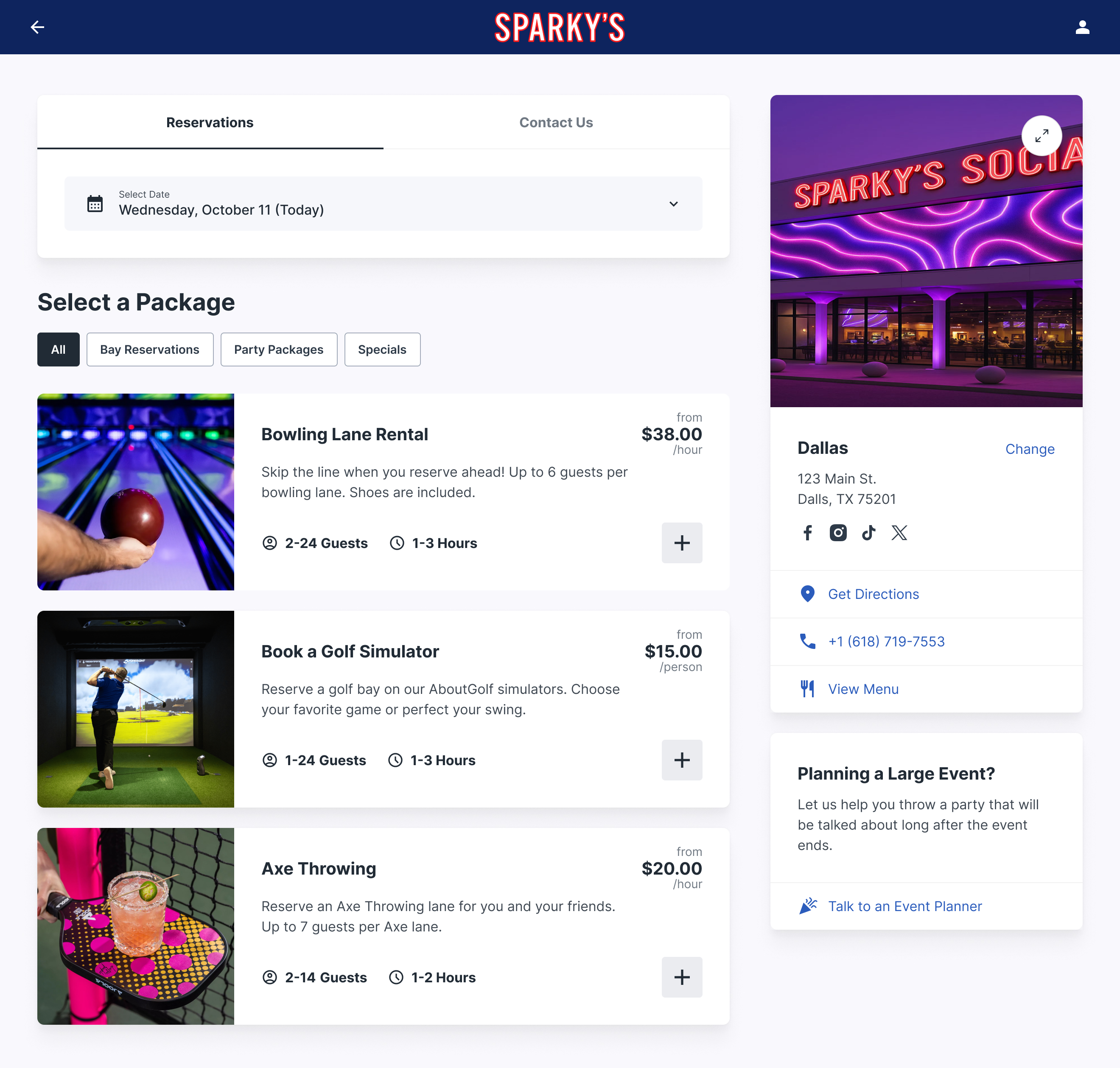
Rex is built specifically for activity-based venues — climbing gyms, bowling alleys, axe throwing venues, and multi-activity entertainment centers. It handles memberships, reservations, events, and retail in one system, with online booking built in. If you're already in the activity venue space or looking at competitive socializing concepts alongside climbing, it's worth a serious look.
Marketing a New Climbing Gym
The climbing community is tight-knit and word-of-mouth driven. Your marketing strategy should start with community, then layer on digital.
- Pre-opening community building — Partner with local climbing clubs, outdoor retailers, and university outdoor programs before you open. Host a route setter social or community setting day. Let climbers feel ownership in the gym from day one.
- Google Business Profile — Climbers searching 'indoor climbing near me' convert at very high rates. A complete, reviewed GBP listing with photos is more valuable than most paid advertising.
- Instagram and short-form video — Climbing is inherently visual. Route setting progress, beta videos, competition highlights — these build organic following among the climbing demographic. Post consistently.
- Intro class funnels — Many non-climbers want to try it but don't know where to start. An intro class priced at $30–$40 that converts participants to month-one memberships is your best acquisition tool.
- Corporate outreach — Email local HR directors and office managers about team events. One corporate booking often generates individual memberships as people return on their own.
- Referral programs — Climbers bring climbers. A simple member-gets-member referral (free month for both parties) can be highly effective in a tight community.
Building Your Route Setting Program
Routes are your product. They need to be refreshed regularly — most gyms rotate 20–30% of their boulder problems or rope routes monthly to keep members coming back. A stale gym is a churn problem.
- Setting schedule — Aim to set at least 8–12 new boulder problems or 4–6 new rope routes per week at a mid-size facility. Higher volume gyms set more frequently.
- Grade distribution — Set for your actual member base, not your aspirations. Most climbing gym members are in the V1–V4 / 5.9–5.11 range. Don't over-set the hard stuff.
- Setter culture — Route setters are artists and athletes. Invest in their professional development, give them autonomy over aesthetic decisions, and pay them competitively. Bad setter retention destroys your product.
- Community setting — Inviting strong community members into setting sessions builds loyalty and surfaces talent you can hire from.
Financial Projections: What Does a Successful Gym Look Like?
A mid-size climbing gym (10,000–15,000 sq ft) in a market with 300,000+ people within 20 minutes, running well:
- Year 1 revenue: $400,000–$700,000 (ramp-up phase, building membership base)
- Year 2 revenue: $700,000–$1,100,000 (stabilizing memberships, programs filling out)
- Mature revenue (Year 3+): $1,000,000–$2,000,000+ depending on market size and programming depth
- Membership count at maturity: 500–1,200 active members for a mid-size gym
- EBITDA margin at maturity: 15–25% is healthy for a well-run gym
- Break-even: Typically 18–36 months post-open, depending on build-out debt and ramp speed
These are ranges — actual performance depends heavily on your market, your lease, your membership pricing, and how well you execute. Build your own model with conservative assumptions and don't count on Year 1 profits.
Frequently Asked Questions
Ready to Build Your Climbing Gym?
Opening a climbing gym is one of the most community-driven business decisions you can make. Get the space right, build a team that loves the sport, set routes people want to climb, and give members a reason to show up three times a week — that's the business.
When you're ready to think about how to manage memberships, reservations, and events without stitching together five different systems, Rex is built for exactly this kind of venue. Activity-based, membership-driven, multi-revenue-stream — that's where Rex works best.
[Book a demo at reservewithrex.com](https://www.reservewithrex.com) to see how climbing gyms and other activity venues use Rex to run their reservation and membership operations.